1. Biggest Surprise:
Reading about the experiential view of the entrepreneur and that "a venture is not simply produced by an entrepreneur" caught my attention. You would think that entrepreneurs start out with an idea and decide to go on a venture to realize their vision. However, according to researchers Minet Schindehutte, Michael H. Morris, and Donald F. Kuratko, there is much more in the process of entrepreneurship than entrepreneurs simply creating ventures. I found it very interesting, and I suppose surprising, that "venture creation... forms the entrepreneur." Creating the venture and experiencing the venture itself is what shapes a person into truly becoming an entrepreneur. How can you be called an entrepreneur before you've actually lived through your venture and created a meaningful story to tell?
2. Confusion:
The theoretical form that "entrepreneurship is a function of the entrepreneur."
3. Two Questions to the Author:
How do you recommend "paddling" or "steering" to get to the desired outcome as mentioned by a discussed author? Many entrepreneurs apparently are going about their journeys wrong, and I would like to know how you would advise someone to paddle his own boat per se.
What would you say are the most important resources "needed to transform dreams into a reality?" Are these resources universal or unique to every entrepreneur?
4. What was the Author Wrong About?
The author stated that "inexperience and incompetent management are the main reasons for failure." However, I believe that you can have a lot of experience in a particular field but can still experience failure in an entrepreneurial endeavour. I believe it is the mindset and the vision that ultimately leads an entrepreneur to success. The author does discuss the importance of mindset and vision in this chapter, but he doesn't state that a lack of these resources is a major cause of failure, which I believe to be true.
Showing posts with label week 3. Show all posts
Showing posts with label week 3. Show all posts
Sunday, January 24, 2016

Week 3 Identifying Local Opportunities
First Opportunity:
1. Article title: DIB Looking for a new Home
2. Article link: http://www.pnj.com/story/news/local/pensacola/downtown/2016/01/23/dib-looking-new-home/79000154/
3. Story description: The organization that hosts "Gallery Night" in Pensacola, FL needs a new office because its lease at the current office ends in October of this year. The chairman of the organization in interested in moving the office location to City Hall because it is more accessible to the public.
4. Problem Description: There is no option to renew the current lease, so John Peacock, chairman of the board, is interested in relocating to city hall
5. Who?: John Peacock and those affiliated with the production of "Gallery Night"
Second Opportunity:
1. Article title: Researchers to Give Long Hollow Tower Presentation
2. Article link: http://www.pnj.com/story/news/2016/01/23/researchers-give-long-hollow-tower-presentation/79188900/
3. Story description: The Long Hollow Radio Tower was claimed by researchers to have been constructed illegally in a conservation district. Melanie Nichols and her team at the North Hill Preservation Association are presenting their findings at a public forum this coming week and discussing how the creation of the tower affects the public and how the functions at city hall can improve.
4. Problem Description: The city has not taken appropriate measures to enforce laws and support the conservation district
5. Who?: North Hill Preservation Association of the conservation district
Third Opportunity:
1. Article title: Local Charter Schools Worth Taxpayer Money?
2. Article link: http://www.pnj.com/story/news/local/education/2016/01/23/charter-schools-cost-taxpayers-produce-mixed-results/79070036/
3. Story description: Newpoint Academy is considered the worst of the charter schools in the Escambia County School District due to allegations of grade tampering at both the middle school and high school locations. According to Escambia Superintendent, Malcolm Thomas, "Almost every [charter school] that had a business that was running the school ended in failure...because the business wanted to siphon money for profit, and there is no profit." The failed charter schools that closed in 30 districts collectively received $70 million (reported by the Associated Press) from state taxpayers' pockets and only $133,000 was able to be recovered from the Florida Department of Education in the past 3 years.
4. Problem Description: Many argue that funding for charter schools takes away money from public schools that are deserving of funds. The charter schools get more money per capita because there are far fewer of them than public schools. Senator Don Gaetz argues that there is a great need for infrastructure in Northwest Florida.
5. Who?: taxpayers, charter schools wanting funding, public schools wanting funding
Fourth Opportunity:
1. Article title: Studers Weigh Potentials of ECUA Land
2. Article link: http://www.pnj.com/story/money/business/2016/01/22/studers-weigh-potentials-ecua-land/79203064/
3. Story description: 19 acres of land previously occupied ECUA's treatment facility of waste water, and now Quint and Rishy Studer haven't decided what they will do with this vacant land that they own. They are planning to spend $150,000 to study potential business opportunities. UWF officials contacted the Studers in hopes to build the UWF Center for Entrepreneurship, but Quint and Rishy decided to sublease 50,000 square feet to the Community Maritime Park.
4. Problem Description: There are a number of potential uses for the open land. The Studers have considered using it for a movie theater, an assisted living facility, a health-care office, and a residential property. First, a study must be implemented to uncover what is still underneath the land such as rubble and concrete foundations and discover potential drainage issues and the like which may impact what kind of new facilities can be built. As mentioned before, this study will cost the Studers $150,000.
5. Who?: Quint and Rishy Studer and community.
Fifth Opportunity:
1. Article title: United Way: Escambia County has 'Pockets of Wonderful'
2. Article link: http://www.pnj.com/story/news/local/escambia-county/2016/01/23/united-way-escambia-county-has-pockets-wonderful/79194918/
3. Story description: Escambia County community leaders and public citizens met and discussed ways to improve the community.
4. Problem Description: Cynthia and one-year-old daughter moved from Washington State to Pensacola and became homeless after faced with economic hardship. The local food pantry, church, and child advocacy center helped this family with temporary food and shelter.
5. Who?: Cynthia and her daughter
1. Article title: DIB Looking for a new Home
2. Article link: http://www.pnj.com/story/news/local/pensacola/downtown/2016/01/23/dib-looking-new-home/79000154/
3. Story description: The organization that hosts "Gallery Night" in Pensacola, FL needs a new office because its lease at the current office ends in October of this year. The chairman of the organization in interested in moving the office location to City Hall because it is more accessible to the public.
4. Problem Description: There is no option to renew the current lease, so John Peacock, chairman of the board, is interested in relocating to city hall
5. Who?: John Peacock and those affiliated with the production of "Gallery Night"
Second Opportunity:
1. Article title: Researchers to Give Long Hollow Tower Presentation
2. Article link: http://www.pnj.com/story/news/2016/01/23/researchers-give-long-hollow-tower-presentation/79188900/
3. Story description: The Long Hollow Radio Tower was claimed by researchers to have been constructed illegally in a conservation district. Melanie Nichols and her team at the North Hill Preservation Association are presenting their findings at a public forum this coming week and discussing how the creation of the tower affects the public and how the functions at city hall can improve.
4. Problem Description: The city has not taken appropriate measures to enforce laws and support the conservation district
5. Who?: North Hill Preservation Association of the conservation district
Third Opportunity:
1. Article title: Local Charter Schools Worth Taxpayer Money?
2. Article link: http://www.pnj.com/story/news/local/education/2016/01/23/charter-schools-cost-taxpayers-produce-mixed-results/79070036/
3. Story description: Newpoint Academy is considered the worst of the charter schools in the Escambia County School District due to allegations of grade tampering at both the middle school and high school locations. According to Escambia Superintendent, Malcolm Thomas, "Almost every [charter school] that had a business that was running the school ended in failure...because the business wanted to siphon money for profit, and there is no profit." The failed charter schools that closed in 30 districts collectively received $70 million (reported by the Associated Press) from state taxpayers' pockets and only $133,000 was able to be recovered from the Florida Department of Education in the past 3 years.
4. Problem Description: Many argue that funding for charter schools takes away money from public schools that are deserving of funds. The charter schools get more money per capita because there are far fewer of them than public schools. Senator Don Gaetz argues that there is a great need for infrastructure in Northwest Florida.
5. Who?: taxpayers, charter schools wanting funding, public schools wanting funding
Fourth Opportunity:
1. Article title: Studers Weigh Potentials of ECUA Land
2. Article link: http://www.pnj.com/story/money/business/2016/01/22/studers-weigh-potentials-ecua-land/79203064/
3. Story description: 19 acres of land previously occupied ECUA's treatment facility of waste water, and now Quint and Rishy Studer haven't decided what they will do with this vacant land that they own. They are planning to spend $150,000 to study potential business opportunities. UWF officials contacted the Studers in hopes to build the UWF Center for Entrepreneurship, but Quint and Rishy decided to sublease 50,000 square feet to the Community Maritime Park.
4. Problem Description: There are a number of potential uses for the open land. The Studers have considered using it for a movie theater, an assisted living facility, a health-care office, and a residential property. First, a study must be implemented to uncover what is still underneath the land such as rubble and concrete foundations and discover potential drainage issues and the like which may impact what kind of new facilities can be built. As mentioned before, this study will cost the Studers $150,000.
5. Who?: Quint and Rishy Studer and community.
Fifth Opportunity:
1. Article title: United Way: Escambia County has 'Pockets of Wonderful'
2. Article link: http://www.pnj.com/story/news/local/escambia-county/2016/01/23/united-way-escambia-county-has-pockets-wonderful/79194918/
3. Story description: Escambia County community leaders and public citizens met and discussed ways to improve the community.
4. Problem Description: Cynthia and one-year-old daughter moved from Washington State to Pensacola and became homeless after faced with economic hardship. The local food pantry, church, and child advocacy center helped this family with temporary food and shelter.
5. Who?: Cynthia and her daughter
Friday, January 22, 2016
Week 3 Very Short Interview No. 1
I interviewed Donna Delfin, an entrepreneur who runs the online clothing boutique, ShopSereneSky.com. I worked as a fashion marketing intern for her company last summer.
The interview questions and answers are as follows:
1. What does it mean to be an entrepreneur?
Growing up with an entrepreneur father, I was surrounded by him starting many businesses and partnerships. It seemed only natural for me to start my own business. To be an entrepreneur, you have to have passion, dedication, and a vision. You have to have the birds eye strategy view yet get lost in the details as well. Being your own boss is tough as you need to be motivated, constantly shift priorities to get things done, and delegate where you can.
2. What do you think I should learn in an entrepreneurship course?
I think honing in on creating a strategy and vision is key. During my career as a producer or project manager, I was in a place where management informed us on projects and priorities. We were not privy to why projects were picked or important. Having my own business, I learned the skills of following trends and researching competitors and the marketplace to see what can work for my brand. I was able to build a brand strategy and stick to it. I've been able to sell this brand style to customers, media, bloggers, influencers, and partners in order to grow further and build brand awareness.
3. What do you wish you had been taught in school before setting out on your own path as an entrepreneur?
I wish school taught students the ins and outs of building a business and the growing pains associated with it. I've been thankful to have great mentors such as my entrepreneur father, accountant turned interior designer mother, and other women entrepreneurs I've met along the way. Thankfully with the Internet, there are many articles out there with resources to start your business, free mentors and free webinars online for other entrepreneurs to review and get started.
During this interview, I learned how important it is to shift priorities depending on what needs to be done on any given day. For Donna, if a blogger contacts her on a particular day about a potential collaboration, she has to switch her focus to this opportunity and send over appropriate contracts. She has to stay up to date with fashion trends so she knows what types of products and clothing/accessory styles to buy and sell; be up to date with current trends and national holidays (such as national doughnut day) in order to write effective blog posts and stay popular on social media; and be willing to accept change whenever consumer preferences shift or new opportunities arise.
The interview questions and answers are as follows:
1. What does it mean to be an entrepreneur?
Growing up with an entrepreneur father, I was surrounded by him starting many businesses and partnerships. It seemed only natural for me to start my own business. To be an entrepreneur, you have to have passion, dedication, and a vision. You have to have the birds eye strategy view yet get lost in the details as well. Being your own boss is tough as you need to be motivated, constantly shift priorities to get things done, and delegate where you can.
2. What do you think I should learn in an entrepreneurship course?
I think honing in on creating a strategy and vision is key. During my career as a producer or project manager, I was in a place where management informed us on projects and priorities. We were not privy to why projects were picked or important. Having my own business, I learned the skills of following trends and researching competitors and the marketplace to see what can work for my brand. I was able to build a brand strategy and stick to it. I've been able to sell this brand style to customers, media, bloggers, influencers, and partners in order to grow further and build brand awareness.
3. What do you wish you had been taught in school before setting out on your own path as an entrepreneur?
I wish school taught students the ins and outs of building a business and the growing pains associated with it. I've been thankful to have great mentors such as my entrepreneur father, accountant turned interior designer mother, and other women entrepreneurs I've met along the way. Thankfully with the Internet, there are many articles out there with resources to start your business, free mentors and free webinars online for other entrepreneurs to review and get started.
During this interview, I learned how important it is to shift priorities depending on what needs to be done on any given day. For Donna, if a blogger contacts her on a particular day about a potential collaboration, she has to switch her focus to this opportunity and send over appropriate contracts. She has to stay up to date with fashion trends so she knows what types of products and clothing/accessory styles to buy and sell; be up to date with current trends and national holidays (such as national doughnut day) in order to write effective blog posts and stay popular on social media; and be willing to accept change whenever consumer preferences shift or new opportunities arise.
Wednesday, January 20, 2016
Week 3 World's Biggest Problems
In no particular order of importance:
1. It is a major problem that the media sells lies to the public. I wish that we as American citizens and as people in general could trust what we see and hear in the national/world news and in product advertisements. In particular, reality television shows, celebrity gossip, and product commercials are completely staged to convey false messages only to gain a certain reaction by the public and to lead the public's attention towards trivial drama and away from important national/world issues. We need to wake up and pay attention to what is actually going on around us.
2. Overall health is a major concern in the world right now, especially in America. More and more people are discovering issues with their health due to lack of proper diet, stress levels, etc. Modern western medicine only seems to cover up symptoms and mask the underlying problems. However, diet choices and mental/emotional clarity need to be prioritized to truly reverse illness and regain health.
3. There are several endangered species in the world, and we need to take action to stop this. Destruction of wildlife habitats needs to end.
4. Pollution of air, water, and soil are major concerns caused by heavy metals, plastics, oil spills, and industrial waste. Clean drinking water is becoming scarce, and industrial development pollutes our oceans, rivers, and seas with toxins. Accumulation of waste impacts this issue greatly. Better waste disposal methods needs to be implemented. Recycle, recycle, recycle.
5. We need to reduce our water footprint (the amount of fresh water that we use daily) and make choices to conserve this vital resource. The meat and dairy industry contributes immensely to this problem. 27% of the water footprint is related to the production of animal products while only 4% of this footprint is related to at-home water use. According to the United States Geological Survey (USGS) it can require up to 18,000 gallons of water to produce just one hamburger. Wow. Instead of cutting back on shower time, how about we just swap the hamburger at lunch for a delicious fruit smoothie?
6. Animal cruelty is a huge world problem. Every day animals are enslaved, beaten, and killed for human consumption, clothing, enjoyment (such as state fairs and circuses), and lab studies. Many people do not realize this harsh reality because it is kept quiet from the public. Why would the media show it? No animal or living being should be treated like property and have to go through such pain and agony. Sorry.
7. Deforestation is a major concern. 40% of all Rain forests have been cleared to raise cattle for the meat industry. If we could all cut back on the consumption of meat, we could do a great service not only to our bodies but also to our rain forests and the amazing animals that naturally inhabit them.
8. Poverty and world hunger is a big problem. Many people do not have financial security, and as a result they are living without shelter and without enough food. I think more loan options, non-profit shelters, and food banks should be available to the public.
9. The importance weight that people put on their own and others' outward appearances is a major problem in our modern society. Many young girls especially concern themselves with how they look; they are constantly comparing themselves to others which can be very unhealthy both mentally and physically. Please, let's stop wondering if something about us is considered "weird" or "unpopular" and just live.
10. This may seem minute compared to other serious issues in the world, but I believe it is a concern that should be addressed. I feel like the majority of people on this planet, my self included, worry about the most insignificant problems, fail to see silver linings, get consumed in negative thought, and cause undue and unnecessary stress to themselves. Through this way of life, relationships are not easily formed, desired outcomes are not easily met, happiness is harder to find, and overall physical and mental health suffers. No fun. Let's be more positive and uplifting, yeah?
1. It is a major problem that the media sells lies to the public. I wish that we as American citizens and as people in general could trust what we see and hear in the national/world news and in product advertisements. In particular, reality television shows, celebrity gossip, and product commercials are completely staged to convey false messages only to gain a certain reaction by the public and to lead the public's attention towards trivial drama and away from important national/world issues. We need to wake up and pay attention to what is actually going on around us.
2. Overall health is a major concern in the world right now, especially in America. More and more people are discovering issues with their health due to lack of proper diet, stress levels, etc. Modern western medicine only seems to cover up symptoms and mask the underlying problems. However, diet choices and mental/emotional clarity need to be prioritized to truly reverse illness and regain health.
3. There are several endangered species in the world, and we need to take action to stop this. Destruction of wildlife habitats needs to end.
4. Pollution of air, water, and soil are major concerns caused by heavy metals, plastics, oil spills, and industrial waste. Clean drinking water is becoming scarce, and industrial development pollutes our oceans, rivers, and seas with toxins. Accumulation of waste impacts this issue greatly. Better waste disposal methods needs to be implemented. Recycle, recycle, recycle.
5. We need to reduce our water footprint (the amount of fresh water that we use daily) and make choices to conserve this vital resource. The meat and dairy industry contributes immensely to this problem. 27% of the water footprint is related to the production of animal products while only 4% of this footprint is related to at-home water use. According to the United States Geological Survey (USGS) it can require up to 18,000 gallons of water to produce just one hamburger. Wow. Instead of cutting back on shower time, how about we just swap the hamburger at lunch for a delicious fruit smoothie?
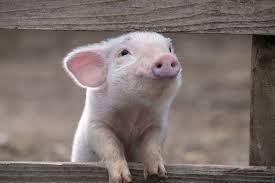
6. Animal cruelty is a huge world problem. Every day animals are enslaved, beaten, and killed for human consumption, clothing, enjoyment (such as state fairs and circuses), and lab studies. Many people do not realize this harsh reality because it is kept quiet from the public. Why would the media show it? No animal or living being should be treated like property and have to go through such pain and agony. Sorry.
7. Deforestation is a major concern. 40% of all Rain forests have been cleared to raise cattle for the meat industry. If we could all cut back on the consumption of meat, we could do a great service not only to our bodies but also to our rain forests and the amazing animals that naturally inhabit them.
8. Poverty and world hunger is a big problem. Many people do not have financial security, and as a result they are living without shelter and without enough food. I think more loan options, non-profit shelters, and food banks should be available to the public.
9. The importance weight that people put on their own and others' outward appearances is a major problem in our modern society. Many young girls especially concern themselves with how they look; they are constantly comparing themselves to others which can be very unhealthy both mentally and physically. Please, let's stop wondering if something about us is considered "weird" or "unpopular" and just live.
10. This may seem minute compared to other serious issues in the world, but I believe it is a concern that should be addressed. I feel like the majority of people on this planet, my self included, worry about the most insignificant problems, fail to see silver linings, get consumed in negative thought, and cause undue and unnecessary stress to themselves. Through this way of life, relationships are not easily formed, desired outcomes are not easily met, happiness is harder to find, and overall physical and mental health suffers. No fun. Let's be more positive and uplifting, yeah?
Subscribe to:
Posts (Atom)